


Article by
Dr. Sharafat Hussain Ph.D
Dr. Sharafat Hussain is a healthcare business consultant, entrepreneur, and academic with strong experience in the US healthcare industry. He is the Founder and Managing Director of Tausch Medical, a revenue cycle management company supporting US healthcare providers with medical billing, prior authorization, credentialing, eligibility verification, A/R follow-up, and patient support services. His work combines practical healthcare operations, business strategy, and academic insight to help medical practices improve efficiency, collections, and service quality.
Creating a patient-friendly billing process starts with making clear who is billing the patient and what the balance covers. The medical practice or healthcare organization that provided the care typically sends the statement, while billing staff explain charges and help resolve questions.
An unexpected balance or unfamiliar insurance adjustment can leave patients unsure what to pay. Clear statements, straightforward explanations of estimates and coverage, and responsive support make the next step easier to understand.
This article explains who provides patient billing statements, how practices can communicate expected costs and insurance coverage, and how to address issues such as confusing charges or billing errors. It also outlines practical ways to clarify billing communication, from the initial estimate through follow-up on a concern.
Key Takeaways
- Understand which healthcare organization sends a patient’s statement and how clear billing support can make charges easier to discuss.
- See how treatment estimates and insurance explanations can help patients anticipate their potential out-of-pocket responsibility.
- Recognize common sources of billing confusion and practical ways to respond to unclear charges or possible errors.
- Learn how billing, insurance verification, and patient scheduling support can help practices create a more coordinated patient experience.
1. Who Provides Billing Statements To Patients?
The medical practice, hospital, or facility that provided care usually sends the patient’s billing statement. Its billing office may prepare the statement directly or manage it through a billing workflow. Patients typically receive statements monthly, usually after 30 days or slightly later, depending on the billing cycle. A clear statement identifies the provider, date of service, charges, insurance payments, adjustments, and remaining patient responsibility. Plain descriptions help patients understand what they owe without decoding unfamiliar billing terms.
Online payment portals and electronic notices can make payments easier to manage. Practices can send notices by email or text and direct patients to a portal showing balances and payment options. A portal can also help patients review separate accounts before paying. For example, staff should confirm which account a payment applies to and allocate it to the intended balance. Payment plans can divide a balance into agreed installments, while staff can explain how to apply for charity programs when available.
Patient-friendly reminders state the balance, due date, available payment methods, and how to ask questions. Billing support by phone or email gives patients a way to ask what a charge covers or report a possible error. When a patient disputes a charge, staff can review the service and account details, explain their findings, and correct any identified billing error. If the concern involves insurance processing, staff can clarify the statement and explain the next step for an appeal.
Consistent statements and responsive support can improve patient satisfaction while helping practices manage revenue cycle follow-up. A practice may refine its medical billing services workflow to coordinate statement accuracy, reminders, and payment allocation. These steps make it easier for patients to understand their options and act on a balance.
2. Treatment cost estimates and insurance coverage explanations
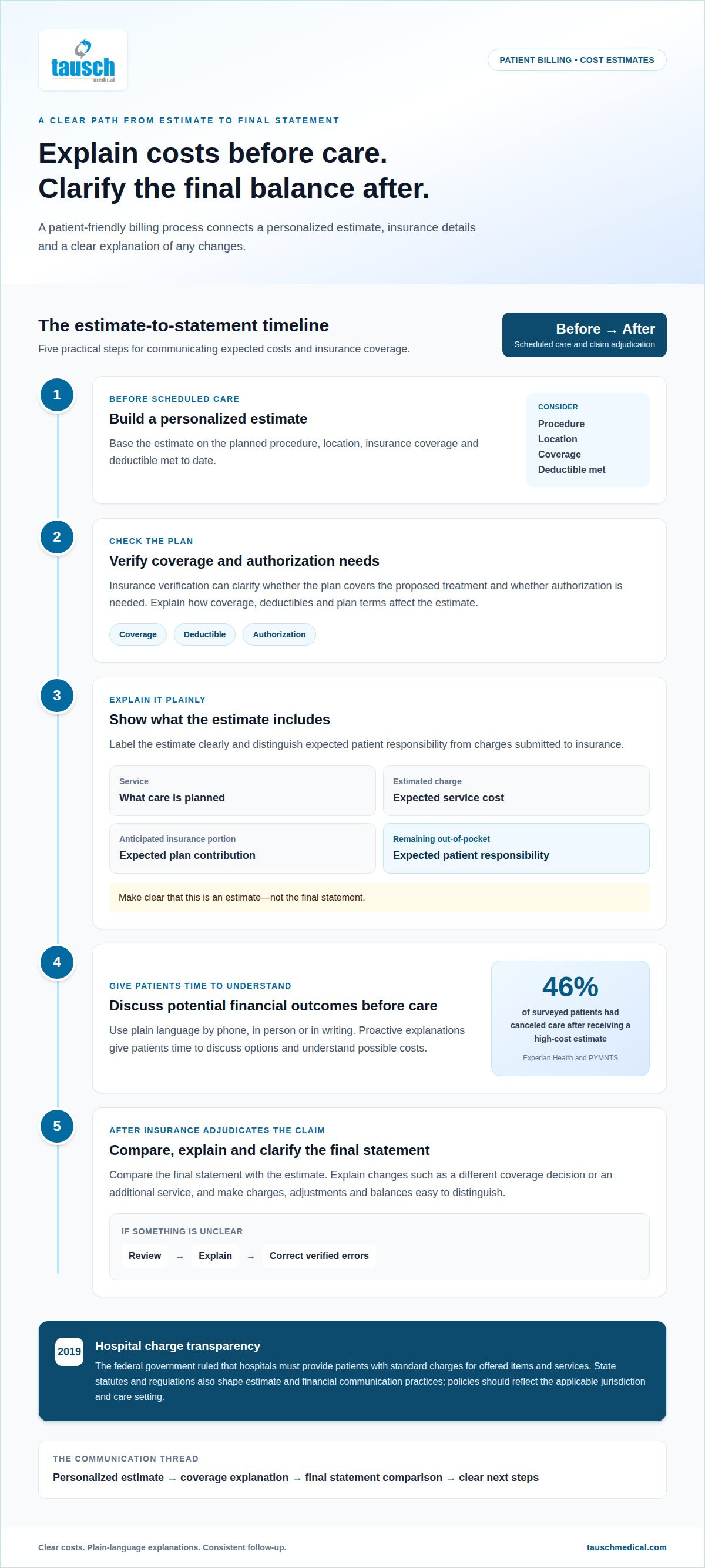
Before scheduled care, give patients an estimate based on the procedure, location, insurance coverage, and deductible met to date. Explain that it is an estimate, then distinguish expected patient responsibility from charges submitted to insurance. For example, show the service, estimated charge, anticipated insurance portion, and remaining out-of-pocket amount. This personalized breakdown gives patients a clearer basis for planning and supports a transparent billing experience.
Insurance verification helps clarify whether a plan covers the proposed treatment and whether authorization is needed. Staff can explain how coverage, deductibles, and plan terms affect the estimate, then share any known patient responsibility before care begins. Experian Health and PYMNTS found that 46% of surveyed patients had canceled care after receiving a high-cost estimate. Proactive explanations give patients time to discuss options and understand potential financial outcomes.
Use plain language in every channel, whether staff explain estimates by phone, in person, or in writing. After insurance adjudicates a claim, compare the final statement with the estimate and explain any changes, such as a different coverage decision or an additional service. Clear communication supports patient satisfaction and gives billing teams a consistent revenue workflow.
In 2019, the federal government ruled that hospitals must provide patients with standard charges for offered items and services. State statutes and regulations also shape estimate and financial communication practices, so policies should reflect the applicable jurisdiction and care setting.
Practices refining their estimate and claim workflows can explore medical billing outsourcing support as one approach to coordinating patient-facing billing processes.
3. Common patient billing issues
Confusing statements can leave patients unsure whether a balance reflects a service, an insurance adjustment, or an unpaid charge. For example, someone may mistake an insurer’s explanation of benefits for an invoice requesting payment. Creating a patient-friendly billing process means distinguishing these documents and clearly labeling charges, adjustments, and balances so patients can see what needs clarification.
Billing errors can include duplicate charges, incorrect patient details, services posted to the wrong account, or insurance coverage applied incorrectly. A hospital billing team can compare a disputed statement with the account record and insurer response. Staff should explain what they find, correct verified account errors, and document the resolution. That record helps the next staff member respond consistently if the patient follows up.
To reduce billing errors and denied insurance claims, practices can verify patient details and coverage, review authorization requirements, and check claim information before submission. When a denial arrives, staff can identify the reason, compare it with supporting records, correct errors, and appeal when appropriate. Tracking recurring denial reasons helps teams find workflow gaps. Creating a patient-friendly billing process also means explaining the next step in language patients can follow.
Payment convenience matters, too. A patient who prefers digital payments may delay payment if statements provide only paper instructions; another may need help understanding insurance coverage first. Practices can offer a clear contact channel, document billing conversations, and follow up after resolving concerns. To strengthen denied-claim follow-up, review claim-denial support options as part of a consistent billing workflow.
Tausch Medical: Patient Scheduling
Tausch Medical supports medical practices with patient scheduling and billing services. When appointment coordination and billing workflows need operational support, these services help practices manage administrative tasks alongside patient financial communications. Insurance verification and authorization support coverage-related workflows, while accounts receivable management helps follow up on outstanding balances.
This support is relevant when a practice is refining how scheduling, insurance information, and billing responsibilities connect. For example, accurate insurance details gathered during scheduling can help staff prepare for coverage-related steps, while organized accounts receivable follow-up helps track balances after statements are issued.
To discuss support for your practice’s scheduling and billing needs, contact Tausch Medical.
Make clearer billing part of your practice workflow
As your practice evolves, review whether its billing workflow still supports the patient experience you want to provide. A focused operational review can help healthcare providers identify where administrative support fits and which priorities matter most to their teams.
Want to see how Tausch Medical can support your practice with reliable medical billing, prior authorization, eligibility verification, A/R follow-up, and RCM support?: Start with our free two-week trial and experience the difference before making a commitment. It’s an opportunity to explore practical support for your practice and decide whether it aligns with your needs.
Frequently Asked Questions
Who Provides Billing Statements To Patients?
The statement should identify the healthcare organization responsible for the care, even when a billing service prepares or sends it on the organization’s behalf. Its contact details should make clear where patients can direct account questions and payment correspondence. For practices in Houston, Dallas, Austin, New York, Miami, and other service locations, consistent sender information helps patients recognize the organization managing their account.
What are the key steps for creating a patient-friendly medical billing process?
Map the workflow from registration through claim resolution, then assign responsibility at each handoff. For example, designate who reviews patient details, monitors claim status, and routes billing inquiries to the right staff member. Keep a record of recurring problems, such as mismatched account information, and use it to improve procedures rather than treating each issue as isolated.
How can healthcare providers explain bills and insurance coverage in plain language?
Translate insurance terms into the action they describe. For example, explain that an “adjustment” is a change to the original charge after insurance processing, and distinguish an insurer’s explanation of benefits from an invoice requesting payment. When a patient asks about a line item, connect it to the service and date shown in their account, then explain it in familiar language.
How can providers estimate out-of-pocket costs before treatment?
Build an estimate from the planned service and the patient’s current benefit information, then show the assumptions behind it. If a treatment plan includes a consultation and a separate test, present them distinctly so patients can see what the estimate covers. Update the explanation if planned services change, and clarify that claim processing determines the final account balance.
What financial assistance and medical bill payment plan options should providers offer?
Give patients a clear route to request available financial assistance, including where to submit an application and which supporting documents are needed. For payment plans, explain the installment schedule, accepted payment methods, and whom to contact if circumstances change. A staff member who can explain these options helps patients choose an appropriate next step without confusing assistance applications with insurance appeals.
Want to see how Tausch Medical can support your practice with reliable medical billing, prior authorization, eligibility verification, A/R follow-up, and RCM support? Start with our free two-week trial and experience the difference before making a commitment: https://tauschmedical.com/free-trial-form
Disclaimer
This article is for general informational purposes only and does not constitute legal, medical, billing, coding, compliance, or financial advice. Healthcare rules, payer policies, and reimbursement guidelines may change and may vary by situation. Please consult qualified professionals or official sources before making decisions based on this content. Tausch Medical is not responsible for any loss or liability arising from reliance on this information.


