


Article by
Dr. Sharafat Hussain Ph.D
Dr. Sharafat Hussain is a healthcare business consultant, entrepreneur, and academic with strong experience in the US healthcare industry. He is the Founder and Managing Director of Tausch Medical, a revenue cycle management company supporting US healthcare providers with medical billing, prior authorization, credentialing, eligibility verification, A/R follow-up, and patient support services. His work combines practical healthcare operations, business strategy, and academic insight to help medical practices improve efficiency, collections, and service quality.
A patient’s financial responsibility is the portion of care costs insurance doesn’t cover, including deductibles, copayments, and coinsurance. Patient financial responsibility best practices make these costs clearer through early communication, coverage verification, and consistent account management. When patients understand how an estimate is developed and what happens after an insurance claim is processed, they can make informed decisions and prepare for payment.
Patients understandably want clarity before care, especially when insurance terms and billing statements are difficult to interpret. Clear explanations, practical estimates, and timely follow-up support a more respectful financial experience, as long as an estimate isn’t presented as a final bill.
This article explains why patient financial responsibility matters, how communication and coverage checks support account management, and which practices help healthcare teams build trust and manage timely payment.
Key Takeaways
- Explain expected patient costs early, using plain language and a clear breakdown of what insurance may not cover.
- Make billing conversations respectful and consistent to help patients understand their balances and available payment steps.
- Verify coverage before appointments, then track claims and account balances so follow-up is based on accurate information.
- When billing workflows need additional support, Tausch Medical provides medical billing, insurance verification and authorization, and accounts receivable management.
1. Patient Financial Responsibility: Why It Matters
Patient financial responsibility is the portion of healthcare costs insurance doesn’t cover, such as deductibles, copayments, and coinsurance. After the insurer processes a claim, the provider bills the patient for any remaining balance. Explaining this sequence early helps patients understand why an estimate may differ from the final statement.
At the initial evaluation, outline expected charges, explain unfamiliar terms, and describe how balances are handled after the visit. Use short sentences and consistent wording in conversations, emails, texts, and mailed statements. An itemized bill separating charges, insurance adjustments, and payments gives patients a clear way to follow the balance.
Give patients a clear way to ask questions and discuss payment options. For example, staff can review the explanation of benefits alongside the bill and clarify the amount remaining due. The AHA Patient Billing Guidelines call for clear communication about financial obligations and assistance for patients who qualify.
Federal and state rules may apply to billing, price disclosures, and medical debt collection. Leadership should review written policies with qualified compliance support, keep procedures current, and train staff to apply them consistently. For certain text communications, the Telephone Consumer Protection Act and state regulations may require patient consent.
To support protections under the No Surprises Act, communicate expected charges before care and explain the services and coverage assumptions behind an estimate. Give patients a clear way to ask questions, and train staff to route concerns through the practice’s billing process.
For billing disputes and appeals, compare the itemized statement with the insurer’s explanation of benefits, document the patient’s concern, and determine whether it involves a charge, adjustment, or claim decision. Explain the next step and record follow-up so the patient can track the review.
Automated email or text reminders can prompt patients about upcoming payments, while mailed statements provide a detailed record. Set leadership oversight for reminder language, consent procedures, and follow-up workflows. Then review billing questions and collection activity to identify improvements.
2. Patient trust, satisfaction, and timely payment
A clear billing process helps patients understand their financial obligations and act without avoidable confusion. Patient financial responsibility best practices include giving each medical bill a detailed explanation of the balance, including payments, insurance adjustments, and the amount remaining. Transparency helps patients see how charges were calculated and where to direct questions.
Collect copayments at the point of service when the amount is known, and explain deductibles or coinsurance using available coverage information. Offer practical payment options, such as cash, check, card, bank transfer, or online payment. If a patient can’t pay the full balance at once, discuss a payment plan with scheduled installments.
An online portal lets patients view statements and pay from home, while electronic notices can direct them to their account. Mailed statements remain useful for patients who prefer paper. Keep every channel consistent so reminders and detailed bills show the same balance.
Collection challenges may include difficulty affording a balance, uncertainty about insurance processing, or confusion about a statement. Staff can explain the next step, record the concern, and follow up after claim processing. Don’t treat an estimate as the final balance before the insurer adjudicates the claim.
Measure collection rates and time to payment together, then review patient feedback and billing complaints for context. Applying patient financial responsibility best practices means examining statement clarity, delivery, and follow-up timing when payments slow. Practices refining their billing workflows can use these measures to identify where patients need clearer information or easier payment access.
3. Patient account management and coverage verification
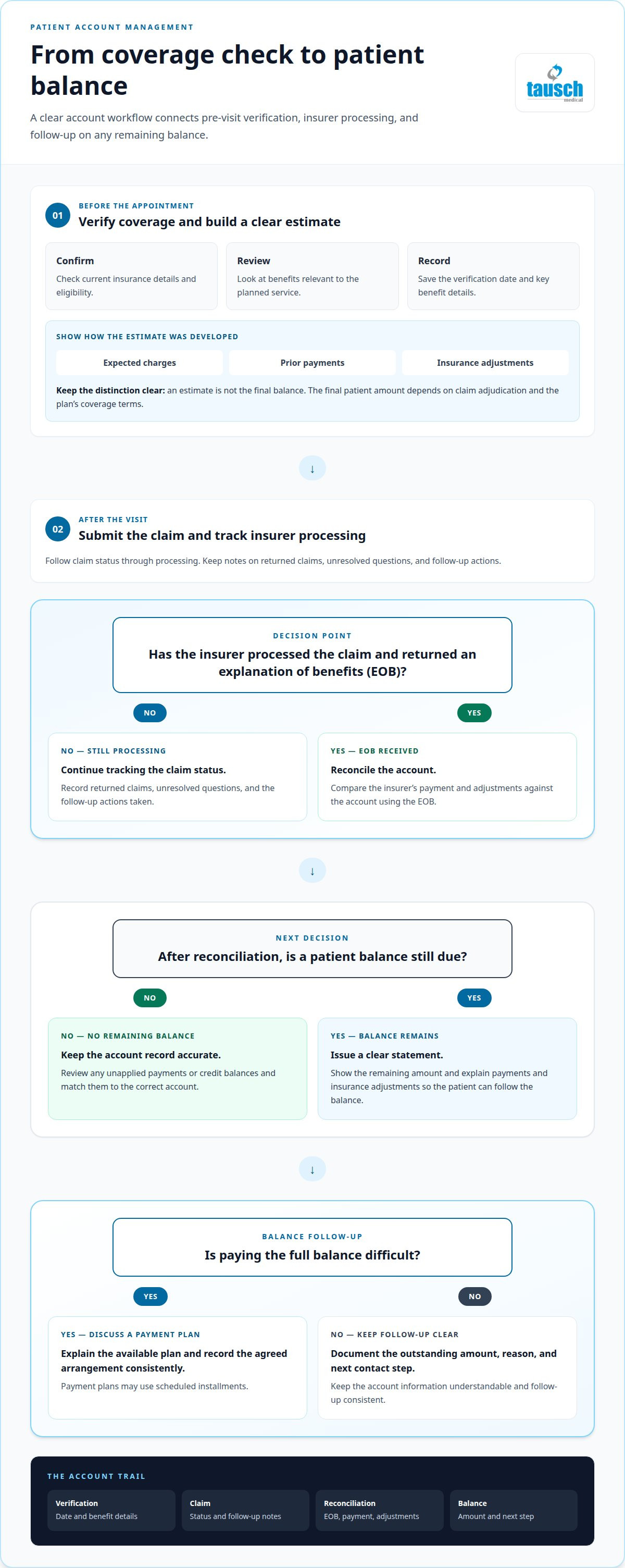
Reliable account management starts before the appointment. Confirm the patient’s current insurance details and eligibility, then review benefits relevant to the planned service. This provides a basis for estimating copayment, deductible, and coinsurance responsibility. Record the verification date and key benefit details so the estimate has a clear reference point.
Explain how the estimate was developed. For example, show expected charges, prior payments, and insurance adjustments separately instead of presenting one unexplained balance. This helps patients understand the estimate without mistaking it for the final amount due.
After the visit, submit the claim and track its status through insurer processing. The final patient balance depends on claim adjudication and the plan’s coverage terms. Once the explanation of benefits arrives, reconcile the insurer’s payment and adjustments against the account, then issue a clear statement for any remaining balance. Note returned claims, unresolved questions, and follow-up actions.
Accurate records also help staff identify unapplied payments or credit balances, which should be reviewed and matched to the correct account. For outstanding balances, document the amount, reason, and next contact step. If paying in full is difficult, explain available payment plans and record the agreed arrangement consistently. These controls support predictable revenue and keep patient accounts understandable.
When verification gaps or aging balances strain workflows, accounts receivable support can help practices manage follow-up and resolve accounts.
Tausch Medical: Medical Billing Services
Tausch Medical supports healthcare practices with medical billing, insurance verification and authorization, accounts receivable management, and medical billing outsourcing. These services help practices coordinate coverage checks with billing workflows and follow up on outstanding accounts.
For patient financial responsibility, the connection is practical: eligibility and authorization processes help staff understand coverage details, while organized billing and A/R follow-up help manage patient balances and claim activity. Practices can use this support when administrative demands make consistent account handling difficult.
To discuss how these services may fit your practice, visit Tausch Medical.
Make Patient Billing a More Confident Process
Billing processes benefit from regular review. Patient questions, complaints, and payment patterns can show where communication or workflows need attention. Use these insights to make practical improvements, such as refining staff guidance or making account information easier to follow.
Applying patient financial responsibility best practices also means treating billing as part of the broader patient relationship. Identify the administrative tasks that place the greatest demands on your team, then consider where operational support could help maintain a consistent process.
Want to see how Tausch Medical can support your practice with reliable medical billing, prior authorization, eligibility verification, A/R follow-up, and RCM support? Start with our free two-week trial and experience the difference before making a commitment: free trial form.
Frequently Asked Questions
What Is Patient Financial Responsibility And Why Is It Important?
Patient financial responsibility is the amount a patient may owe for healthcare after insurance pays its share. Understanding it helps patients assess the financial implications of planned care and prepare questions before agreeing to services. For a practice, a shared understanding of the balance makes later billing conversations more focused, since patients can distinguish their portion from the insurer’s.
What does patient financial responsibility mean in healthcare?
In healthcare, patient financial responsibility refers to costs assigned to the patient under their insurance plan or for services insurance doesn’t cover. A deductible, copayment, or coinsurance may affect the patient’s share, depending on the plan and service. For example, a patient may owe a fixed copayment for one visit, while another service applies toward an unmet deductible.
What are best practices for verifying insurance eligibility and benefits before a visit?
Use a consistent intake workflow: confirm the patient’s identifying and insurance details, review active coverage and benefits for the planned service, and note any authorization requirements. Record the information source and date in the account. If the appointment or service changes, repeat the relevant review so staff don’t rely on benefits checked for a different service.
How should healthcare providers estimate and communicate out-of-pocket costs before treatment?
Base an estimate on the planned service, available benefit information, and the patient’s deductible status, then explain the assumptions in plain language. Separate known charges from amounts that depend on insurer processing. If the care plan changes, update the estimate and explain what changed, such as a different service or coverage detail, before relying on the earlier figure.
How should providers create clear, accurate patient bills and explain charges?
Reconcile the account after insurance processing, then review each charge against the service record and payer adjustment before issuing a statement. Include dates of service, descriptions patients can recognize, payments received, and the remaining balance. If a patient disputes an item, log the specific charge and review outcome, then provide a corrected statement if the account review supports a change.
Disclaimer
This article is for general informational purposes only and does not constitute legal, medical, billing, coding, compliance, or financial advice. Healthcare rules, payer policies, and reimbursement guidelines may change and may vary by situation. Please consult qualified professionals or official sources before making decisions based on this content. Tausch Medical is not responsible for any loss or liability arising from reliance on this information.


